Even in the era of horse-drawn carriages, technological progress never stood still. Today, the automotive industry and the field of chiptuning auto are advancing at a breakneck pace. To fully grasp the history of chip tuning, let’s first explore the origins of automobile manufacturing.

In the realm of chiptuning auto, chip tuning is the modification of a vehicle’s electronics to enhance its speed and power characteristics. In specific cases, such as commercial or agricultural machinery, the primary goal may be to reduce fuel consumption.

Gone are the days when a mechanic would manually tweak a car’s engine to squeeze out extra horsepower. Nowadays, it’s common knowledge that virtually every modern vehicle is packed with electronic chips. These tiny powerhouses collect data from a network of sensors and fine-tune the engine’s operation. At its core, fitting a car with a tuning chip means interacting with one of these sensors to unlock greater potential.

You’ve likely encountered statements from proponents of traditional chip tuning (OBD tuning) like this: Almost every manufacturer of tuning boxes claims to use advanced German technology. The sad truth is, there’s nothing technically complex about these boxes. All tuning boxes connect between the ECU and the sensors. By altering the data from these sensors, they increase power and torque. There’s zero innovation here. Not a single tuning box even supports feedback. The ECU’s signals about the car’s condition aren’t transmitted to the box, so it doesn’t adapt to the car’s state. What we get is just a simple deception.

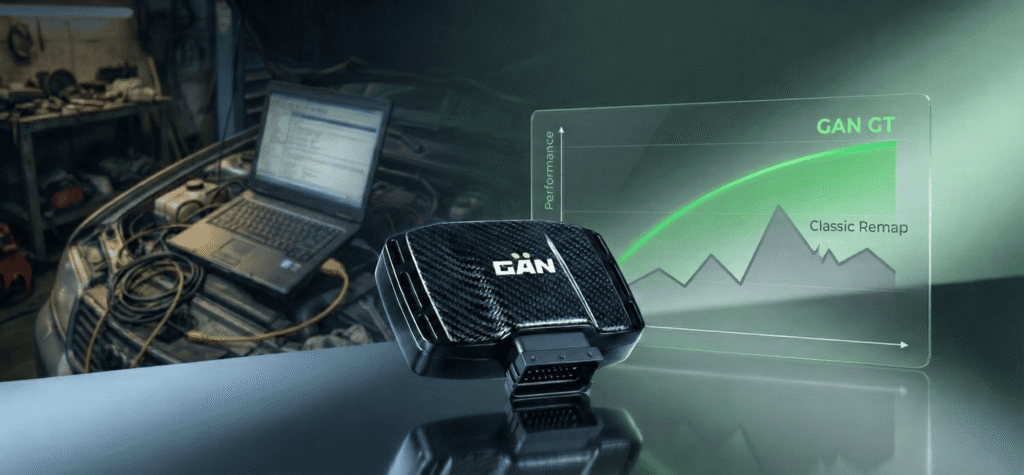
Fuel consumption is an elusive metric, shaped by a constellation of subtle factors that often go unnoticed at first glance. The effect of a performance tuning chip on how much fuel your car guzzles depends heavily on the way you handle the wheel. For drivers with a gentle touch, chipping cars can spark a welcome drop in fuel use. On the flip side, those who lean into a more spirited driving style might watch their fuel gauge dip a bit faster. To get to the bottom of this, let’s dive into the mechanics of tuning modules, spotlighting GAN’s blocks as our example.

We’re living in a digital age overflowing with high-tech insights, so it’s no shock that technical and scientific articles are everywhere. Yet, this flood of info has a downside: for the everyday car owner, sorting through the noise to understand what upgrades are possible—and how they’ll impact factory settings—can feel like cracking a secret code. In this article, we’re breaking down one of the car’s trickiest systems, the electronic control unit (ECU), blending simplicity with the nitty-gritty details you crave.

In the world of chiptuning auto, many car owners hesitate to tweak their vehicles, fearing that installing a tuning chip like the GAN GA+ might strip away their car’s warranty. It’s a fair worry—nobody wants to risk their safety net. So, let’s slice through the confusion, tackle the key questions, and shed light on what’s really at stake.

Let’s kick things off with a quick detour into the past to uncover the origins of the turbo-diesel engine. Back in 1885, English tinkerer Herbert Akroyd Stuart started messing around with paraffin oil for engines. Unlike gasoline, which evaporated too easily in carburetors, paraffin was a stubborn fuel that sparked his curiosity.

When we chat about our rides, terms like diesel
or gasoline engine
get tossed around like spare change, and some gearheads love flexing their turbocharged beasts. But naturally aspirated engine
? That’s a phrase that doesn’t exactly trip off the tongue. Still, look around—most of the cars humming through our city streets rely on these unsung heroes.

Most articles about chipping cars come straight from the desks of companies knee-deep in the tuning game, subtly steering you to think it’s all rainbows and horsepower. We’re taking a different road. This is an unfiltered, no-agenda look at chiptuning auto—we don’t care if you tune your car or not. What you do with your ride is your call. We’re just here to lay it out straight.

In English, tuning
means tweaking or fine-tuning, and when it comes to cars, it’s all about leveling up your ride. Think of it as giving your vehicle a personal upgrade—whether that’s better performance on the road or a slicker look. Typically, tuning involves swapping out factory parts for something more advanced, like beefing up the suspension, upgrading the brakes, or even jazzing up the body. The idea is to make your car drive smoother, faster, or just turn more heads.

Chip tuning aims to change a car's characteristics, and ECU remapping serves as a method to adjust the software. This guide covers the topic from basic concepts to choosing a service and legal aspects. Experience in chip tuning helps car owners make informed decisions. For example, the owner of a turbocharged Volkswagen Golf engine gained a 25 percent increase in power without compromising its lifespan, which was confirmed by dynamometer measurements.

Chip tuning remains one of the most popular upgrades for car owners looking to increase power and performance. By 2025, the market has expanded, but the topic has accumulated myths due to low-quality services and inflated expectations. Based on dyno data, real-world tests, and extensive experience, we break down the common misconceptions about chip tuning. This article will separate fact from fiction, revealing the pros and cons, benefits and risks, all based on calibration and diagnostic analysis.

The wrong tuning service provider can lead to a loss of money on useless work, damage to the car requiring subsequent repairs, and even legal problems due to non-compliance with traffic police regulations or the loss of the factory warranty. Choosing the right shop ensures that the tuning will enhance performance without risking the engine and transmission. This article breaks down the process step-by-step, showing how to select the right tuning service provider to avoid common mistakes. The recommendations are based on experience in chip tuning, where projects begin with data analysis on dyno stands and selecting solutions for specific needs.

Chip tuning can cause potential problems if approached without proper preparation. Negative consequences often arise from incorrect calibration or low-quality software, creating risks for the engine and other vehicle systems. Breaking down the risks into technical, financial, and legal aspects helps drivers understand how to avoid common mistakes.

Chip tuning improves vehicle dynamics, increases power output, and optimizes fuel consumption. The driver gets a more responsive engine, faster acceleration, and the potential to save fuel during calm driving. Tests show noticeable performance gains on turbocharged engines, with fuel savings of up to 15 percent.
Contact us via WhatsApp
We are using cookies so that your shopping experience gets better. By continuing to browse our website you are accepting USAGE OF COOKIES.